Free UK tracked delivery on research orders over £75 — dispatched same day before 3pm
Free UK tracked delivery on research orders over £75 — dispatched same day before 3pm
Glutathione and NAD+ are important molecules studied across cellular and biochemical research. Explore how they are investigated in antioxidant defense, cellular energy production, DNA repair, oxidative stress, and other research pathways.
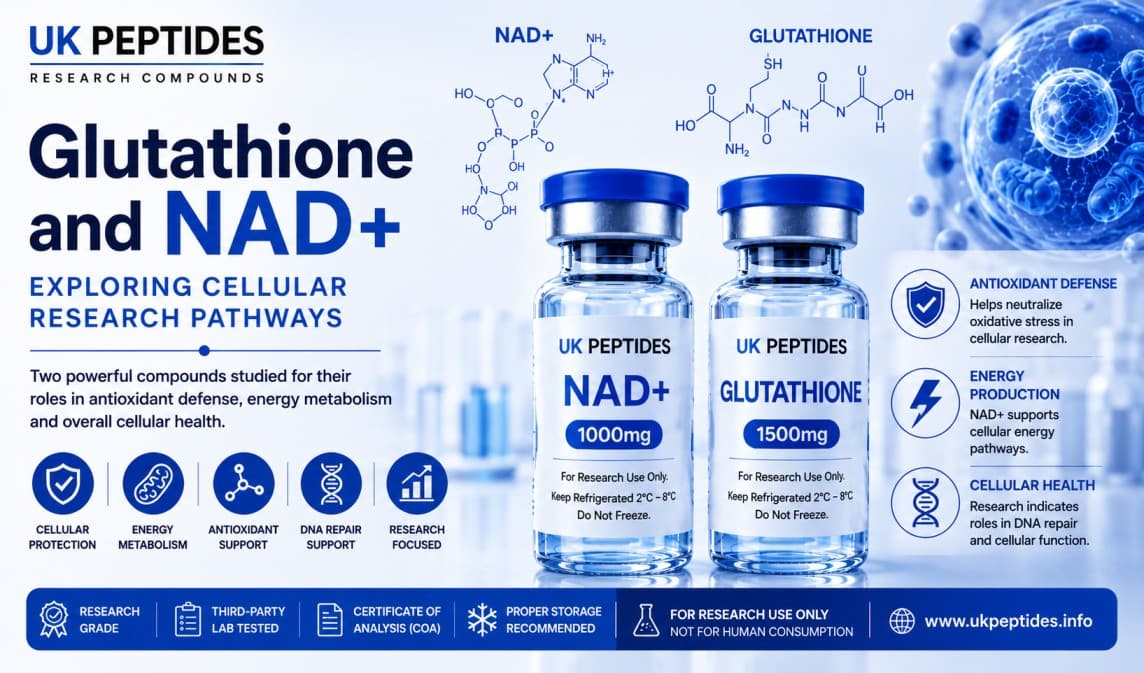
Glutathione and NAD+ both hold prominent places in cellular biochemistry research. Though structurally unrelated, the two intersect often enough to make for a natural research pairing.
Glutathione is a tripeptide antioxidant, primarily tasked with neutralising reactive oxygen species and supporting detoxification. NAD+, by contrast, is a coenzyme central to energy metabolism and redox chemistry across virtually every cell.
Both molecules feature in studies covering:
Oxidative stress and redox balance
Mitochondrial function
Cellular ageing processes
Metabolic and detoxification pathways
Some research has looked at how NAD+-dependent enzyme activity might relate to glutathione's antioxidant function within the broader picture of cellular redox regulation — an area still under active investigation.
Because both molecules touch on how cells manage oxidative stress and energy output, researchers sometimes examine them together to build a fuller understanding of mitochondrial health and cellular resilience.
UK Peptides supplies glutathione and NAD+ as separate, individually labelled research compounds, each with its own batch-specific documentation for laboratory use.
Glutathione and NAD+, as described here and supplied by UK Peptides, are research chemicals only — neither is licensed as a medicine by the MHRA, and neither is intended for human or animal use, consumption, or therapeutic application. This content is educational and not medical advice.
This article is provided for educational purposes to support laboratory research. All products supplied by UK Peptides are for in-vitro research use only and are not medicines, supplements, or intended for human or veterinary consumption.