Free UK tracked delivery on research orders over £75 — dispatched same day before 3pm
Free UK tracked delivery on research orders over £75 — dispatched same day before 3pm
Discover the key research differences between these two compounds, including their molecular structures, antioxidant roles, cellular pathways, and areas of scientific investigation. Learn how glutathione and NAC are studied in laboratory research and what distinguishes their research applications.
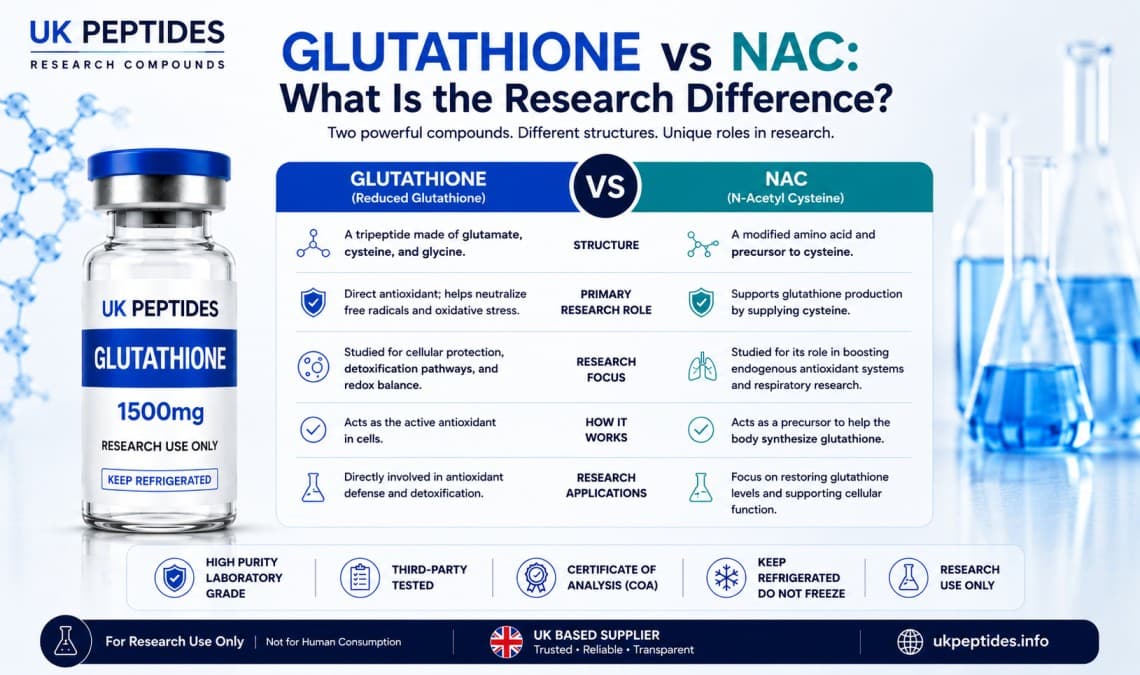
Glutathione and NAC (N-acetylcysteine) often appear side by side in research discussions, but the two compounds are chemically and functionally distinct.
NAC is a modified form of the amino acid cysteine, and it acts as a precursor within the body's own pathway for producing glutathione. Researchers frequently study NAC for its potential to support intracellular glutathione levels.
Glutathione is the active tripeptide antioxidant itself, made of three linked amino acids. NAC is a single, smaller molecule that must be converted through the body's synthesis pathway before contributing to glutathione production.
Some research focuses directly on glutathione to examine its antioxidant and detoxification roles, while other work centres on NAC to understand how precursor availability shapes internal glutathione synthesis. Studying both offers a more complete view of the pathway.
Despite their differences, both compounds turn up in studies on oxidative stress, liver function, and cellular defence — with the exact research focus depending on which molecule is being examined.
Glutathione and NAC, as supplied by UK Peptides, are for laboratory research only. Neither is licensed as a medicine by the MHRA, and neither is intended for human consumption. This piece is a research comparison, not supplementation guidance.
This article is provided for educational purposes to support laboratory research. All products supplied by UK Peptides are for in-vitro research use only and are not medicines, supplements, or intended for human or veterinary consumption.