Free UK tracked delivery on research orders over £75 — dispatched same day before 3pm
Free UK tracked delivery on research orders over £75 — dispatched same day before 3pm
Explore our complete guide to glutathione research, including its role as a major cellular antioxidant, oxidative stress research, detoxification pathways, cellular protection, and current areas of laboratory investigation. Learn about glutathione’s structure, research significance, and key considerations when evaluating glutathione for scientific research.
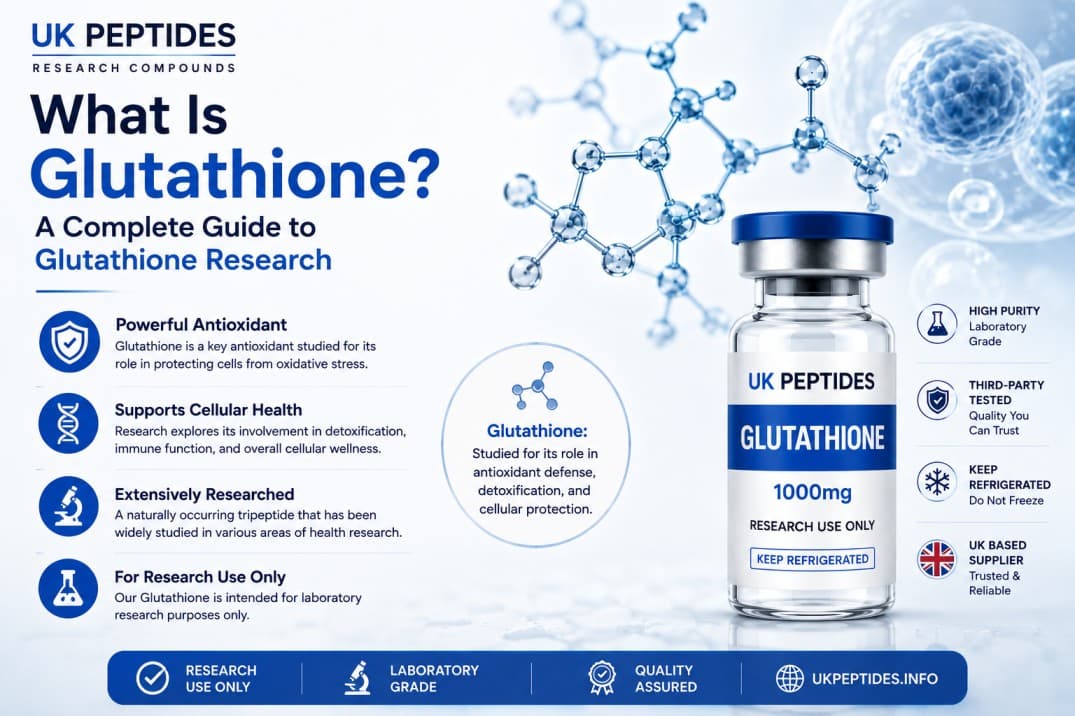
Glutathione is a compact molecule built from three amino acids — cysteine, glutamine, and glycine — linked together into a tripeptide. It's present throughout the body at the cellular level and ranks among the most extensively researched antioxidant compounds in biochemistry.
The molecule shifts between two forms: reduced glutathione (GSH), the biologically active state, and oxidised glutathione (GSSG), which forms once GSH has neutralised reactive compounds. Researchers frequently use the balance between these two forms as an indicator of a cell's oxidative status.
Glutathione's involvement in neutralising reactive oxygen species and supporting liver detoxification processes makes it relevant across several fields of study, including:
Oxidative stress and cellular ageing
Hepatic metabolism and detoxification
Immune cell activity
Mitochondrial health
The body produces glutathione internally through a multi-step enzymatic process centred largely in the liver — a major reason it's often described in scientific literature as the body's principal antioxidant.
Laboratories typically receive glutathione as a stable, freeze-dried powder that's reconstituted as needed. UK Peptides supplies research-grade glutathione to laboratories and qualified researchers.
This article is educational only. Glutathione supplied by UK Peptides is a research chemical, not assessed or licensed as a medicine by the MHRA, and must not be consumed, injected, or otherwise used in or on the human body. No medicinal or therapeutic claims are made.
This article is provided for educational purposes to support laboratory research. All products supplied by UK Peptides are for in-vitro research use only and are not medicines, supplements, or intended for human or veterinary consumption.