Free UK tracked delivery on research orders over £75 — dispatched same day before 3pm
Free UK tracked delivery on research orders over £75 — dispatched same day before 3pm
None of these produce a visible signal. All of them degrade material before it reaches your assay.
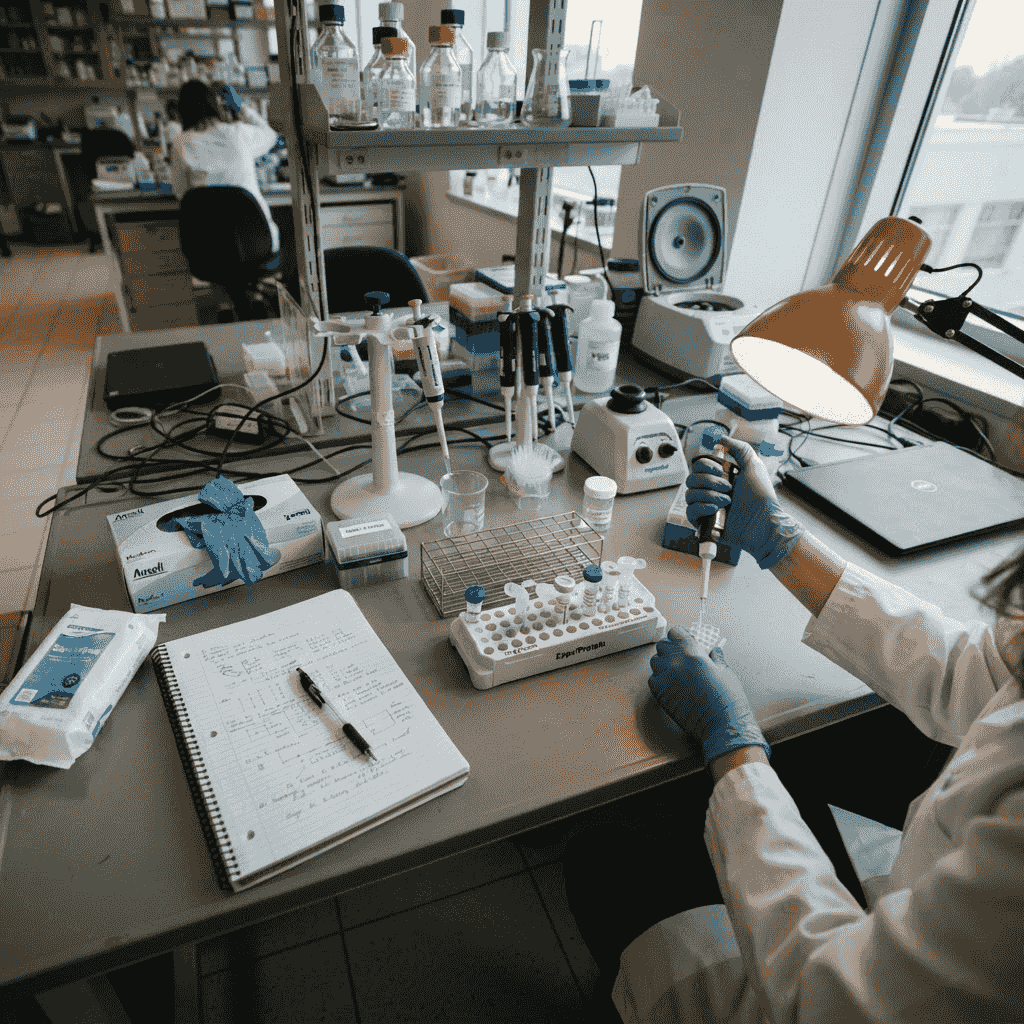
Most peptide degradation at the bench is undramatic. The powder still looks like powder, the solution still looks clear, and the result is simply less reproducible than it should be.
Vigorous shaking or vortexing shears peptide chains and drives aggregation at the air-liquid interface. Foam is the visible symptom, but damage occurs before foam appears. Roll the vial between your palms or swirl gently, and give it time.
Firing bacteriostatic water directly into the lyophilised cake at speed causes localised mechanical stress and can leave undissolved fragments clinging to the vial wall. Direct the stream against the inside glass and let it run down.
Take a vial straight from -20°C, pop the stopper, and ambient humidity condenses onto cold glass and powder immediately. Let the vial equilibrate to room temperature, sealed, before you open it. This costs fifteen minutes and prevents hydrolysis.
Each cycle is an opportunity for aggregation and concentration gradients. If you know you will need a stock solution across multiple sessions, aliquot into single-use volumes first and freeze those. Thaw what you need and nothing more.
This one is administrative rather than chemical, and it is the most common. Without a date you cannot judge whether a solution is inside its stability window, which means you cannot defend the result. Compound, concentration, date. Every vial. Every time.
Four of these five failures share a cause: treating a research reagent like a consumer product. The material arrives with a documented purity figure attached to it. Handling is the only variable between that figure and your data — and it is entirely under your control.
This article is provided for educational purposes to support laboratory research. All products supplied by UK Peptides are for in-vitro research use only and are not medicines, supplements, or intended for human or veterinary consumption.